Search

SealBoss News / Blog

Industrial Concrete Floor Repair: Where Polyurea Fits

Polyurea Floor Repair Guide

Industrial Concrete Floor Repair: Where Polyurea Fits

A damaged control joint, a random crack, and a surface spall may appear in the same traffic lane. That does not make them the same repair.

Diagnose the condition. Select the repair role. Then plan the installation.

When an industrial floor begins to break down, the first instinct is often to ask which product will fix it. A better starting point is to ask what has actually failed.

Is the opening a planned joint or an uncontrolled crack? Is concrete missing, or is the slab still moving? Does the repair need to support joint edges, rebuild damaged concrete, or address a deeper condition beneath the slab?

Those questions matter because industrial concrete floor repair is not a one-material job. A semi-rigid polyurea joint filler serves a different purpose from a rigid material used to rebuild a spalled edge. Neither will correct settlement, active water pressure, or an unstable slab.

Polyurea can be an important part of a floor-repair system when it is matched to the right condition. The repair objective still comes first.

Polyurea Floor Repair Is Not a Floor Coating

Search for “polyurea floor repair,” and many results lead to full-surface garage or commercial floor coatings. That is not the type of repair discussed here.

Localized industrial floor repair addresses defined areas of damage, including control and construction joints, random horizontal cracks, spalled joint edges, pop-outs, holes, deteriorated joint filler, and damage in forklift or vehicle traffic lanes.

A coating covers a broad floor surface. A localized repair addresses a particular defect. That distinction affects material selection, concrete preparation, dispensing equipment, repair geometry, finishing, and return-to-service planning.

How to Diagnose Concrete Floor Damage Before Choosing a Product

Visible damage provides useful clues, but it does not always reveal the complete cause. A crack may be stable or still moving. A broken joint edge may result from hard-wheel impact, weak concrete, an unfilled joint, or slab movement. Separated filler may point to continued shrinkage, moisture, inadequate preparation, or a material that did not match the joint condition.

Observed floor condition Question to ask first General repair direction
Saw-cut control jointDoes the joint need edge support under wheeled traffic?A semi-rigid joint filler may be appropriate
Construction jointAre the joint walls sound, clean, dry, and ready to receive filler?Evaluate the joint-filling system
Random horizontal crackIs the crack stable, or is movement continuing?Determine whether rigid or flexible behavior is required
Surface spall or pop-outDoes missing concrete need to be rebuilt?Evaluate a rigid repair material
Broken joint shoulderMust the concrete edge be reconstructed before the joint is filled?Repair the damaged concrete first
Existing filler separationIs the cause shrinkage, movement, moisture, preparation, or geometry?Inspect before removing and replacing
Expansion or isolation jointHow much movement must the joint accommodate?Confirm the appropriate movement-joint system
Rocking, settlement, active water, or widespread crackingIs a larger slab, support, or water condition involved?Investigate before making a localized repair

This table provides general orientation rather than a project-specific recommendation. Movement, moisture, substrate condition, temperature, repair depth, traffic, and finish requirements can all change the appropriate repair approach.

Joint Filling and Concrete Rebuilding Are Two Different Repairs

One of the most useful distinctions in industrial floor repair is the difference between filling a joint and rebuilding damaged concrete.

Semi-Rigid Joint Filling

A semi-rigid joint filler is installed in a prepared joint or appropriate crack. In the right application, it helps support the vertical concrete edges as wheels cross the opening.

Rigid Concrete Rebuilding

A rigid repair material is used where concrete is missing, fractured, or deteriorated, such as a surface spall, broken joint shoulder, hole, pop-out, or stable crack requiring a rigid repair.

Some floor repairs need both. A damaged joint edge may first need to be rebuilt with a rigid repair material. Once the concrete has been restored and the joint geometry re-established, the opening can be filled with a material chosen for the joint’s intended behavior.

The two materials may meet within the same repair area, but they are not performing the same function.

Semi-rigid polyurea joint filler

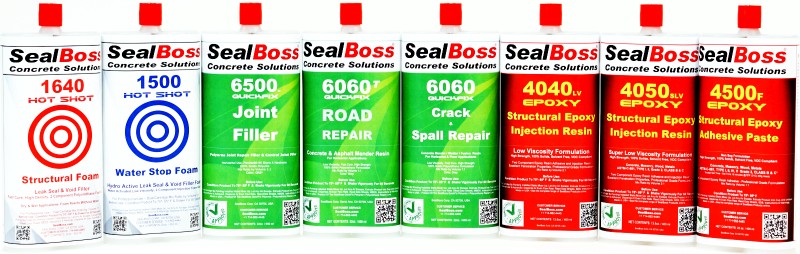
SealBoss 6500 QuickFix

SealBoss 6500 QuickFix is a rapid-setting, self-leveling, two-component polyurea joint and crack filler for concrete substrates. Its stated applications include horizontal cracks, control and construction joints, and industrial floors exposed to hard-wheel or vehicle traffic.

In an appropriate joint-filling application, SealBoss 6500 QuickFix helps support the concrete edges as traffic crosses the opening. That makes the system relevant to warehouse floor joint repair, distribution centers, manufacturing floors, cold-storage facilities, and other concrete floors exposed to wheeled equipment.

Selection depends on the joint type, anticipated movement, moisture, temperature, repair geometry, traffic, and required finish. The technical documentation calls for a dry repair area and dry dispensing equipment and excludes cracks and joints under hydrostatic pressure or with extreme movement.

Fast-setting behavior can be valuable in an active facility, but cure speed alone does not determine whether a material belongs in a particular joint.

SealBoss 6500 UVR: When Joint Appearance Matters

The appearance of a finished joint may also matter, especially on polished floors or near exterior openings where sunlight can affect the way a repair looks.

SealBoss 6500 UVR provides an option within the polyurea joint-filler system where UV-related color stability is relevant. Joint function, movement, substrate condition, and installation requirements still control the overall selection. UV resistance should not be interpreted as complete immunity from color change under every exposure condition.

Rigid polyurethane repair material

SealBoss 6060 QuickFix: Rigid Repair for Spalls and Damaged Concrete

SealBoss 6060 QuickFix serves a different repair role. Its Product Data Sheet identifies it as a rigid polyurethane repair material designed for spalled concrete, horizontal cracks, holes, surface defects, and damaged control joints. It also directs users toward a flexible SealBoss product where movement is required.

This makes SealBoss 6060 QuickFix relevant when the objective is to rebuild or bond damaged concrete rather than fill a joint that requires semi-rigid behavior.

For suitable repair geometries, the material may also be used with approved, dry, nonreactive aggregate. Aggregate selection, proportions, repair depth, preparation, and finishing must follow the SealBoss technical instructions.

SealBoss 6500 QuickFix

Fills joints and appropriate cracks where semi-rigid support is needed.

SealBoss 6060 QuickFix

Addresses rigid cracks, spalls, holes, damaged shoulders, and surface defects.

Choosing between them begins with understanding what the completed repair must do.

Control Joint Repair Versus Expansion Joint Repair

Not every straight opening in a concrete floor is intended to behave the same way. Control, construction, isolation, and expansion joints are created for different reasons. Their expected movement and relationship to the surrounding slab influence how they should be treated.

Before filling a joint, determine whether it was formed or saw cut, whether it separates slabs or structural elements, whether movement is expected, and whether the concrete edges remain sound. An opening that has widened, old filler, water, contamination, or vertical displacement may also affect the repair approach.

A control joint intended to guide shrinkage cracking should not automatically be treated like an expansion or isolation joint intended to accommodate broader movement. When the joint function or movement requirement is unclear, technical or design-professional review may be necessary.

Speed and Spec Sheets Do Not Replace Diagnosis

Active facilities often have limited repair windows. The work may need to fit into one shift, a weekend shutdown, or a production changeover.

Rapid-setting materials can provide a practical scheduling advantage when their reaction and cure profile matches the repair conditions. But speed does not answer the most important questions: Is the opening a joint or a crack? Is movement continuing? Is the concrete sound? Is the repair area dry? Does the repair need semi-rigid, flexible, or rigid behavior?

The same caution applies to individual specification values. A laboratory elongation result, for example, does not by itself establish how much movement an installed joint can accommodate. Material hardness, joint dimensions, bond condition, concrete strength, temperature, moisture, slab shrinkage, and traffic also influence installed behavior.

Diagnose the condition. Select the repair role. Then plan the installation window.

Surface Preparation Controls the Repair

Rapid-setting material cannot compensate for contaminated or unsound concrete.

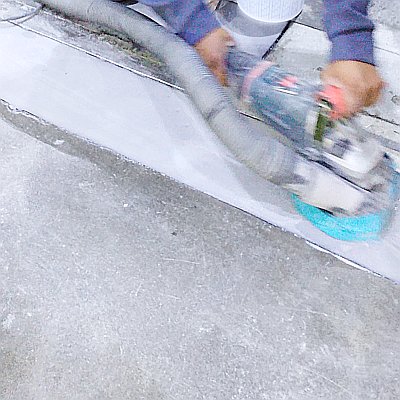
Oil, tire rubber, concrete dust, loose material, moisture, weak joint shoulders, and debris can interfere with the repair. Problems may also result from off-ratio dispensing, cured material inside a static mixer, or equipment that has not been prepared for the chosen product.

SealBoss technical guidance calls for removing contaminants, exposing clean concrete, removing saw-cut dust, and keeping the repair area, pumps, and hoses dry. Preparation must match the product and repair geometry. The Product Data Sheet, Safety Data Sheet, application guidance, and equipment instructions remain the controlling field documents.

Good material placed against a poor surface is still a poor repair condition.

When Joint Filler Separates, Find the Cause First

When existing filler pulls away from one side of a joint, it is tempting to remove it and install new material immediately. That may not address the reason the joint opened.

Continued slab shrinkage, movement beyond the filler’s limits, moisture, contamination, weak concrete, installation geometry, or dispensing conditions may all contribute to separation.

Inspect the joint and surrounding slab before replacing the material. Otherwise, the same underlying condition may remain after the repair.

Repairing a Damaged Joint Edge

A deteriorated joint is not always just an empty opening. The shoulder may be rounded, fractured, spalled, or missing. Installing filler against unsound concrete can leave the primary defect unresolved.

  1. Identify why the joint edge deteriorated.
  2. Remove loose and unsound concrete.
  3. Establish sound repair boundaries.
  4. Rebuild the damaged concrete with an appropriate rigid repair material.
  5. Restore the required joint geometry.
  6. Fill the joint with a material chosen for its intended behavior.
  7. Finish and cure the repair according to the current technical instructions.

This sequence explains the repair logic. It does not replace SealBoss application guidance or project-specific review.

Cartridge or Bulk Floor-Repair Equipment?

The size of the repair program influences the dispensing system.

Cartridge Configurations

Cartridge systems can be practical for localized repairs, punch-list work, maintenance quantities, and sites where mobilizing larger equipment is not justified.

Bulk Configurations

Bulk systems may be better suited to longer joint-filling runs, larger floor-repair programs, and repetitive production work requiring metered two-component dispensing.

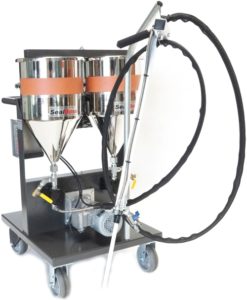
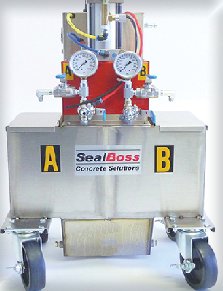
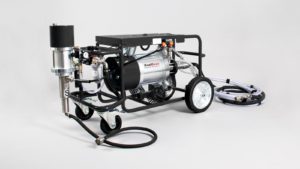
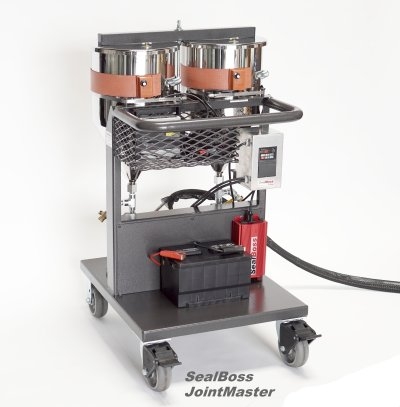
For compatible bulk applications, SealBoss JointMaster equipment connects the repair material to a dedicated two-component dispensing platform. Equipment compatibility should be confirmed for the exact material and configuration.

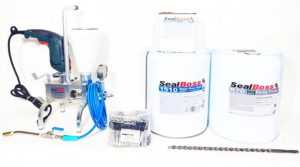
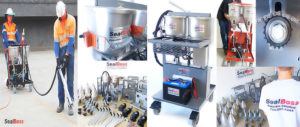
The product is only one part of the installation. A complete setup may also include a dual-component cartridge gun or metered pump, static mixers and applicators, joint-cleaning and preparation equipment, approved aggregate where permitted, finishing tools, cleaning and pump-conditioning materials, current documentation, and a crew familiar with the system.

The Practical Advantage of the SealBoss Floor Repair System

The SealBoss advantage is not a claim that one product solves every floor problem. It is the ability to connect different repair objectives with materials, dispensing options, accessories, training, and technical support.

Repair materials SealBoss 6500 QuickFix, SealBoss 6500 UVR, and SealBoss 6060 QuickFix address different joint-filling and rebuilding roles.
Application systems Cartridge and bulk configurations support different repair volumes, with mixers, applicators, cleaners, and JointMaster equipment.
Training and support Technical documents, equipment guidance, product training, and SealBoss support help connect selection to application.
Match the material and application system to the repair role instead of treating every joint, crack, and spall as the same problem.

When the Floor Needs More Than a Local Repair

Some conditions should not be treated as routine filling or patching.

Rocking or deflecting slabs, settlement, loss of support, repeated cracking, significant movement, active water, widespread deterioration, reinforcement corrosion, chemical attack, or vertical displacement may indicate a larger problem.

A localized polymer repair cannot correct unresolved slab support, structural movement, or water-pressure conditions by itself. These conditions may require additional technical or engineering review before a repair system is chosen.

Choose the Repair Role Before the Product

The most useful question is not, “Should we use polyurea?”

It is: “What must the completed repair do under the actual floor conditions?”

For horizontal joints and appropriate cracks requiring a rapid-setting semi-rigid polyurea joint filler, review the SealBoss 6500 QuickFix system. Where UV-related color stability matters, review SealBoss 6500 UVR. For concrete spalls, holes, surface defects, damaged joint shoulders, and rigid crack-repair objectives, review SealBoss 6060 QuickFix.

Where active water, significant movement, slab instability, or structural concerns are present, confirm the repair approach before choosing a material.

Frequently Asked Questions

What is the difference between a control joint and an expansion joint?

A control joint is formed or saw cut to guide shrinkage cracking within a slab. An expansion or isolation joint separates concrete elements and is intended to accommodate broader movement. The two joint types should not automatically receive the same filler system.

Can polyurea joint filler be used for concrete spall repair?

A semi-rigid polyurea joint filler is not the material used to rebuild missing concrete. A spall, hole, or broken joint shoulder generally requires a rigid repair material suited to that condition. After the damaged concrete has been rebuilt and the joint geometry restored, the joint can be evaluated for filling.

Why did my joint filler separate from the concrete?

Possible causes include continued slab shrinkage, movement beyond the filler’s limits, moisture, contaminated or weak joint walls, improper installation geometry, or dispensing problems. Inspect the joint and surrounding slab before replacing the filler.

Should I use cartridges or bulk dispensing equipment?

Cartridges are commonly suited to localized and maintenance repairs. Bulk metered equipment can be more practical for longer joint runs and larger repair programs. Confirm compatibility between the exact material, mixer, applicator, and dispensing equipment.

This article provides general educational guidance and does not make a project-specific product or engineering determination. Review the current SealBoss technical documents and obtain appropriate technical or design-professional input for the actual project conditions.

Need Help Selecting the Right Floor-Repair System?

Discuss the joint, crack, spall, equipment requirements, and project conditions with a SealBoss technical representative.

Midwest Joint Fill Training | SealBoss 6500 Polyurea & JointMaster Pump

Midwest Joint Fill Training
SealBoss 6500 Polyurea & JointMaster Pump

Another

On the Job Training

Joint Fill & Repair

Heartland Warehouse Renovation

Introduction:

This article explores the real-world training and application of the SealBoss® 6500 QuickFix Polyurea Joint Filler and the JointMaster® Pro2 Pump during a recent aerospace facility renovation project. The focus is on the critical importance of proper industrial floor joint repair in high-performance environments, particularly in sectors with heavy equipment use and stringent facility requirements.

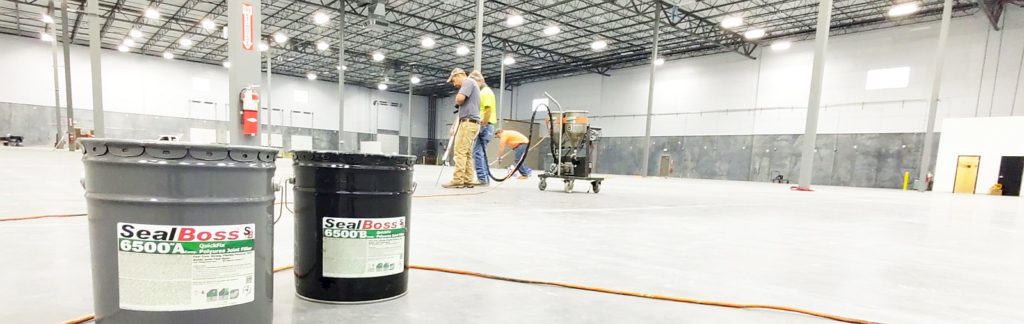
The case study is based in St. Louis, Missouri, where a local contractor—new to joint filling work—was selected to complete repairs on 6,000 linear feet of floor joints. Understanding the complexity and performance standards expected by the aerospace client, the contractor partnered with SealBoss for professional training. A SealBoss Technical Representative provided on-site, hands-on instruction to ensure proper use of both the material and the pump system.

This project showcases the effectiveness of direct technical support and the role of quality equipment in enabling successful outcomes, even for contractors without prior experience in joint filling. It also highlights how tailored renovation work helps prepare industrial floors for the heavy-duty usage expected in aerospace and manufacturing environments.

As the construction of tilt-up concrete buildings and warehouse facilities continues to rise nationwide, many existing structures are not immediately suitable for new tenants and require modification before operations can begin. Floor joint restoration using reliable products like SealBoss 6500 Polyurea and the JointMaster Pro2 Pump can be an essential part of that process—ensuring durability, performance, and long-term facility integrity.

SealBoss Expertise Elevates Industrial Floor Joint Repair at Aerospace Facility

On-Site Training Brings Professional Results in St. Louis, Missouri

In the thriving industrial hub of St. Louis, Missouri, SealBoss was called upon to provide specialized, on-site training in the use of  SealBoss professional-grade Floor Repair Systems.

A SealBoss Technical Representative visited a local contracting team to deliver targeted instruction in joint filling techniques using the SealBoss® 6500 QuickFix Polyurea Joint Filler and the JointMaster® Pro2 Dispensing Pump.

This hands-on training session was designed not only to introduce the contractor to SealBoss technologies but also to prepare them for an urgent renovation at a warehouse soon to be occupied by a major aerospace company. The goal: enable a successful, high-performance floor joint fill that would meet the strict operational standards of a high-profile tenant.

Meeting Aerospace Industry Demands with Advanced Joint Filler Technology

The aerospace industry places exceptional demands on facility infrastructure. In this case, the client required a durable floor surface capable of handling continuous heavy forklift traffic and the movement of substantial aerospace components.

To meet these challenges, the project team selected SealBoss 6500 QuickFix Polyurea, a fast-cure, heavy-duty joint filler with A 80 Shore hardness and 200% elongation. This advanced material is engineered for industrial environments where impact, stress, and movement are constant. Its flexibility and toughness ensure long-lasting performance—especially crucial in environments that cannot afford downtime.

Equipping the Team: The JointMaster® Pro2 Joint Fill Pump

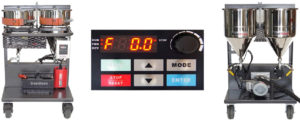
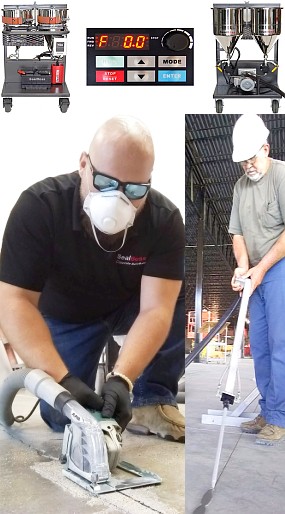
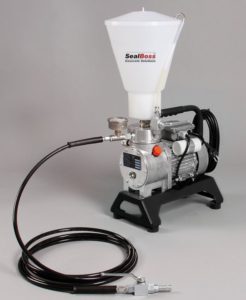
The project marked the first time the contractor used the JointMaster® Pro2 Pump, a battery-powered, dual-component pump designed specifically for dispensing fast-setting polyurea joint fillers. Recognizing the importance of proper equipment use, the SealBoss Technical Representative provided detailed instruction on pump operation, material mixing, flow control, and cleaning procedures.

Thanks to its intuitive design, the pump quickly became a natural extension of the crew’s workflow, allowing for precise, efficient filling throughout the day.

Scope of Work: 6,000 Linear Feet in One Day

The scope of the project was significant: fill and finish 6,000 linear feet of floor joints within a single day. While ambitious, this target was achievable through careful planning, expert training, and the efficiency of the SealBoss system.

Day-Before Surface Preparation

Preparation began the day before joint filling, with the contractor removing all failed or deteriorating joint material. Adhesion and delamination issues were resolved, and the joints were cleaned thoroughly. Backer rod was inserted to the proper depth across all areas to ensure optimal material flow and control during the next day’s application.

Streamlined Team Configuration for Maximum Efficiency

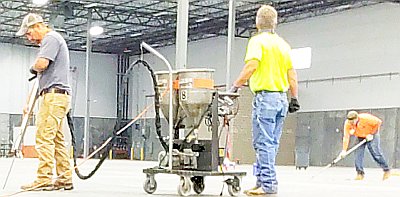
To complete the project in the shortest possible time while ensuring seamless execution and maximum efficiency, a three-man crew configuration was implemented:

  • Pump Operator – Managed flow and refill, maintaining steady output from the JointMaster Pro2 Pump.

  • Joint Filler Applicator – Guided the dispensing nozzle and ensured joints were filled evenly.

  • Floater / Finisher – Performed critical joint shaving within 8–15 minutes of fill, maintained supply of materials, and ensured the entire process stayed on track.

This streamlined crew layout proved highly efficient for fast-paced, high-volume joint filling. 

From Training to Performance: Results That Speak for Themselves

After a concise yet thorough training that included a product overview, equipment setup, and a 20-minute hands-on session, the contractor’s team quickly demonstrated their ability to handle the task. With a dispensing rate exceeding half a gallon per minute, the crew successfully filled and shaved the entire 6,000 feet of joints in a single day.

This successful outcome underscores the transformative value of SealBoss support—empowering even less-experienced contractors to deliver professional results under demanding conditions.

Conclusion: High-Caliber Products Paired with Expert Support

This project in St. Louis exemplifies the SealBoss commitment to excellence—combining premium products with in-person technical training to deliver top-tier industrial solutions. As the demand for tilt-up warehouse renovations grows across the United States, projects like this one illustrate the value of selecting a partner who goes beyond product sales and invests in contractor success.

With SealBoss 6500 QuickFix Polyurea Joint Filler and the JointMaster Pro2 Pump, facilities can be prepared to meet the rigorous demands of aerospace, logistics, and other heavy-duty industries—quickly, efficiently, and professionally.

Interested in training, product demos, or partnership opportunities? Contact SealBoss today.

3 man crew joint fill sealboss

 “We Provide Field Service When You Need It!

We have been offering experienced and responsive technical support since 1988. While providing on-site support and training, we create a positive learning environment focusing on building applicator confidence allowing for successful repairs to be continued after the training.  From training new companies and their employees, SealBoss has continued to provide support to our clients for over 36 years.

On-site training consists of an overview of products, the pump and it’s features. This is followed by hands on training with actual dispensing of material on the job site until the applicator has gotten confident with the application techniques and nuances of the material used. Finally we focus on the correct cleaning procedure of the equipment.

We don’t leave a job site until I’m confident that everyone is fully comfortable with the systems and capable of teaching the next person in line.

With a knowledgeable technical support team, we are here to help with any questions you may have.”

leaking-crack-repair-sealboss
SealBoss &reg Technical Support and Sales Team
Contact Your SealBoss ® Technician

10 Minute Concrete Floor Crack Mender & Spall Repair

Ultra Fast Concrete Crack Mender and Spall Repair Resin

Discover the cutting-edge advancements in concrete repair technology. Presenting our lightning-speed, durable, and efficient crack mender and spall repair resin.

Whether it’s reviving floors in bustling warehouses, busy parking facilities, or any structure requiring steadfast and enduring repairs, do it with unprecedented efficiency.

But that’s not all! This multi-purpose resin is also your solution for quick asphalt road fixes.

Want a safe, non-slip finish? Simply integrate our recommended sand aggregate.

Concrete Confidence: Experience Restoration Mastery in Moments!

10 Minute Concrete Floor Crack Mender & Spall Repair

SealBoss 6060 QuickFix

This Structural Polyurethane is an advanced material that addresses the challenges faced in repairing damaged concrete. Its unique characteristics and properties make it an ideal solution for various applications and environments.

The material’s low surface tension and viscosity allow for easy and complete saturation bonding of cracks, requiring only minimal preparation to remove loose debris.

When the material is allowed to gravity-flow to the full depth of the crack, the repair is considered structural.

Manufactured sand or quartz can be introduced into the repair process and added at a ratio of up to two parts sand to one part mixed polyurethane during crack filling to extend the material’s coverage and enhance its strength. SealBoss 6060 is highly versatile and can be applied over a wide range of substrate temperatures, making it suitable for use in frozen and cold storage warehouse applications or cold weather applications. After the repair is completed, the surface is can be ready to accept traffic in as little as ten minutes at 72°F (22°C), ensuring minimal disruption.

SealBoss 6060 QuickFix is Your Fast Concrete Floor and Road Repair System

SealBoss 6060  is a super low viscosity, fast setting two component polyurethane concrete crack mender offering outstanding penetration properties, superior strength and durability.

At a mixing ratio of 1 to 1 by volume, the mixed product can be used neat or mixed with a sand aggregate to create a quick repair mortar. The product is cured chemically and does not need any moisture to react.

10 Minute Concrete Floor Crack Mender & Spall Repair


  • Very Fast Cure
  • Short Turnaround Time
  • Very Low Viscosity
  • Creates Repair Mortar with Dried / Silica Sand
  • Super Strong Polyurethane Formula
  • Outstanding Bond Strength & Penetration Properties
  • Use In Combination With SealBoss 6500 Polyurea Joint Fillers
  • Products is available in Cartridges
6060 QuickFix Resin is a very thin chemical cure product. 6060 polyurethane crack mender resin reacts within minutes of application. You can use it as low viscosity self leveling resin or as a quick set repair mortar. The product has excellent bond strength, compressive & tensile strength, all of which are achieved within minutes of cure. SealBoss 6060 QuickFix and fast cure SealBoss 6500 Polyurea Joint Fill products are the recommended choice for timely floor repairs in commercial warehouses and other areas of traffic. Products are also available in cartridges
Chris Coderre
National Sales Manager

In Conclusion

The ability of SealBoss 6060 to penetrate deeply into cracks and bond directly to the concrete-aggregate matrix ensures long-lasting and reliable repair.

Structural Polyurethane is adaptable for use in extreme temperature conditions, making it suitable for a range of industries and applications where traditional repair materials might fail.

The rapid curing time of SB 6060 minimizes downtime and disruptions, allowing for swift resumption of normal activities in the repaired area.

Given the material’s versatile nature, it can be used to address a wide variety of concrete damage, including cracks, spalls, and other structural defects.

The compatibility of SealBoss 6060 with Portland Cement Concrete (PCC) enables a smooth blending with pre-existing concrete structures, minimizing the aesthetic effects of repairs.

By incorporating SealBoss 6060 Structural Polyurethane into the repair process, professionals can effectively extend the service life of concrete structures while maintaining their appearance and structural integrity. This innovative material offers a highly effective, efficient, and durable solution for restoring distressed concrete and ensuring its longevity.

10 Minute Concrete Floor Crack Mender & Spall Repair Related Articles


Learn More

Feel free to reach out to us at 714-662-4445 for any inquiries, or submit a contact request here. We are eager to assist you in finding the right solution. Expert technical representatives are available to provide on-site support upon request.

Contact Your SealBoss ® Technician

Polyurea Floor Joint Filler | Fast Setting

Polyurea Floor Joint Filler | Fast Setting
SealBoss 6500

Fast Concrete Floor Joint Filler
SealBoss ® 6500 QuickFix

  • Fast setting formula reduces downtime
  • Self Leveling
  • Semi-Rigid / Flexible Formulations available
  • Outstanding Bond Strength & Penetration Properties
  • Tough physical properties reduce floor joint repairs and maintenance
  • Reduces the rate of joint deterioration in older floors
  • Will cure in temperatures as low as -20° F (-29°C)
  • Custom Colors
  • Use In Combination With SealBoss 6060 Concrete Floor Crack & Spall Repair Resin
  • Product is available in Cartridges

SealBoss 6500 is a rapid setting polyurea joint filler, engineered to seal and protect floor joints in industrial and commercial environments. Such as heavy duty warehouses and distribution center facilities, stained and polished concrete floors in retail stores, schools and many other floor settings with high traffic.

6500 QuickFix Polyurea Joint Filler is a self leveling chemical cure filler product. Let me just touch on some of the highlights.

SealBoss 6500 polyurea cures within minutes of application. The product is available in two variations of flexibility and shore hardness. The product provides excellent bond strength within minutes of cure. Unlike to epoxy joing fillers, SealBoss 6500 cures at very low temperatures. SealBoss 6500 standard color is grey but custom colors are available.

Our fast cure SealBoss 6500 Polyurea Joint Fill and SealBoss 6060 QuickFix Concrete Crack and Spall Repair products are the recommended choice for timely floor repairs in commercial warehouses and other areas of traffic. The floor repair materials are also available in cartridges.

Inquire more about the outstanding SealBoss 6500 and SealBoss 6060 concrete repair products when you call us here at SealBoss. Your representative will gladly help you out.
Chris Coderre
Regional Sales Manager
Contact Your SealBoss ® Technician

Freezer Floor Crack Repair

Freezer Floor Crack Repair

Freezer Floor Repair

The addage ‘time is money and money is time’ is no mystery to warehouse operators and owners.

When valuable foods such as meats, seafoods or produce are stored in areas with cold temperatures, floor repairs needs can start to present themselves, especially when ice becomes an issue.

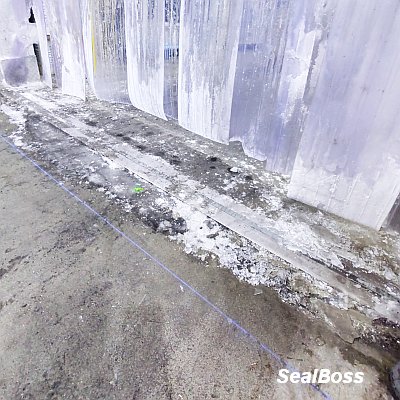
In the freezer department of a food handling facility, the transition threshold between the freezer area and the cold prep area was in jeopardy due to spalling.

Warehouse operators and owners understand how important it is to keep the floors in smooth and navigable condition.

Besides the obvious concerns of safety, hygiene, and aesthetics, pallet jacks may get stuck and damaged, and warehouse forklift wheels take a constant pounding.

Safety is the always the number one concern for the responsible and liable business operators.  Pallet jacks and forklifts need to run as smoothly as possible over floors, ramps, and transitions — for the security and safety of the operators and the merchandise.

Forklift tires and other impact related repairs or equipment replacement can be very expensive. When the equipment is rattled and chewed up by damaged concrete floors and ramps the costs add up quickly.

Last, but not least, good hygiene and manageable, clean surfaces are an expected standard in a food product environment.

Something Needed To Be Done

Freezer Floor Crack and Spall Repair with SealBoss QuickFix

SealBoss 6060 QuickFix has the ability to cure in temperatures as low as -20° F / -29° C making it an incredibly resilient and reliable product to repair damaged floors in the harshest conditions.
With a set time of less than 5 minutes at room temperature, a good repair team can return a warehouse floor back to service in the same day, keeping business flowing and the revenue stream healthy.

Warehouse owners do not have the luxury of waiting full shifts to allow for products to cure over the span of several hours but rather need something that can get the job done within half of a working day.

Prior to the repair, SealBoss 6060 QuickFix has to be thoroughly mixed and, when used in colder ambient temperatures,  conditioned to room temperature in order to achieve the best results. Properly prepped material is key to ensuring the job goes smoothly, as the final curing of the material happens only within minutes after applying the mixed material.

The spall has to be dry, debris free and uniform in depth, with a minimum of ¾ of an inch. Taking these steps will ensure good adhesion and prevent delamination.

As an example, with this job where the material was used to great success, a blowtorch was applied briefly to the substrate in order to melt and remove any ice, to get rid of excessive moisture and to warm up the general area for good bond and quick cure.

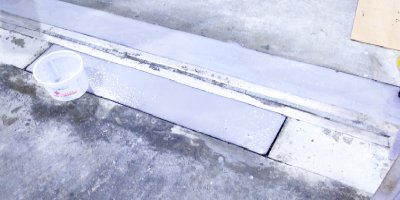
Important: Application should not leave any gaps between substrate and repair. Any entry points for water must be sealed to prevent water from entering. Joints and gaps can be filled with flexible SealBoss 6500 Polyurea Joint Filler.

When used in conjunction with the SealBoss 6500 Polyurea Joint Filler, these two SealBoss QuickFix Line floor repair products provide a 1-2 punch that allows for fast back to service operations.
Mission Accomplished

SEALBOSS-6060-SMALL
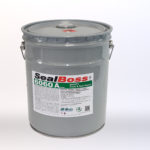
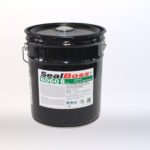
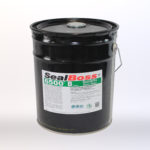
SealBoss 6060 A
SealBoss 6060 B
SEALBOSS-6500-SMALL
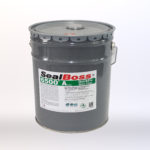
SealBoss 6500 A
SealBoss 6500 B
SEALBOSS JOINTMASTER JOINT FILL PUMP
SB JointMaster

Video – Floor Crack Repair SealBoss 6060
Floor Spall Repair and Concrete Crack Mender

Texas Floor Repair | Joint Fill

Texas Joint Fill Floor Repair

SealBoss JointMaster Pump Rushed to El Paso

Texas Floor Repair Joint Fill

Another High School Floor Repaired & Concrete Joints Filled in Texas

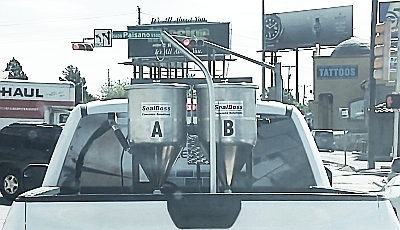
A SealBoss Technical Rep drove down to El Paso, TX in timely support of local contractor who upgraded from an old outdated pump with polyethylene tanks, that was difficult to use and clean, to the stainless steel tank equipped new Jointmaster Pro 2 G3i polymer joint filler pump. 

How to Operate and Clean a Joint Filler Pump

“On-site training consists of an overview of the machine and it’s features. This is followed by hands on training with actual dispensing of material into the joints until the applicator has gotten comfortable with the application techniques and nuances of the material used. Finally we focus on the correct cleaning procedure of the equipment.

We won’t leave a jobsite till I know everyone is comfortable with the systems and can reteach the next person in line.

Instead of breaking out the tools and hoping you can find parts for your old bulk dispensing pump, maybe it is time to upgrade to the SealBoss Jointmaster 2 and schedule your on-site training to get you comfortable with your new machine. 

With a knowledgeable technical support team, we are here to help with any questions you may have.”

leaking-crack-repair-sealboss
Technical Sales Team
SEALBOSS JOINTMASTER JOINT FILL PUMP

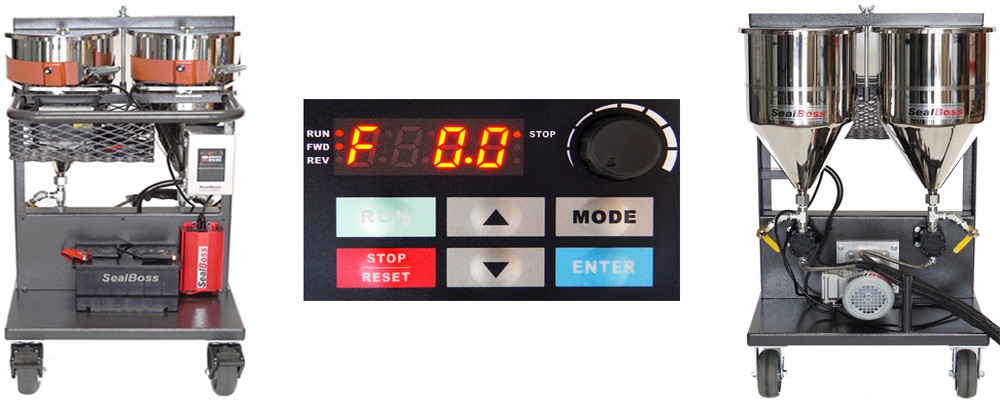
JointMaster Pro 2 Machine Advantages

  • Over 8 hour working time with 12V Marine Deep Cycle Battery
  • Lightweight with a Powder Coated Frame & Stainless Steel Hoppers
  • Works with any 1:1 Self Leveling Jointfill | Polyurea | Epoxy
  • Optional accessories for conditioning material
  • 4000 – 6000 linear feet average of material dispensed per battery cycle

In Person and Video training is available upon request, contact SealBoss today to speak to your regional technical representative on our SealBoss full system solutions and offerings.

Contact Your SealBoss ® Technician

Floor Repair Training

Floor Repair Training

Elevating Floor Repair Standards: Comprehensive Training with SealBoss

In the competitive world of floor maintenance, hands-on floor repair training is undeniably essential. Acknowledging this, SealBoss has stepped up to offer a comprehensive “Floor Repair Training” program across key regions. With a hands-on approach and a commitment to imparting practical skills, SealBoss is redefining industry benchmarks.
Spreading Expertise Nationwide

SealBoss’s vision transcends geographical boundaries. The company is actively reaching out to warehouses and big-box stores all over the country. The mission? To introduce and implement solutions that address cracks and joints efficiently and economically using the innovative SealBoss Polyurea and Polyurethane Floor Repair System.

In-Depth, On-Site Training Sessions

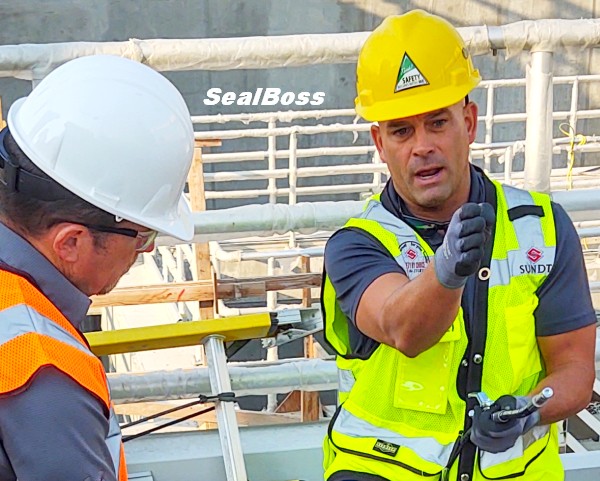
SealBoss’s floor repair training sessions emphasize hands-on, practical learning. These on-site training sessions cater to both SealBoss representatives and their valued customers.

Training Highlights: From Theory to Practice

The SealBoss training program stands out for its holistic approach. Participants are introduced to the SealBoss QuickFix Polyurea and Polyurethane Floor Repair system, where they learn the nuances of preparing joints and cracks. The training delves into the application of polyurea and polyurethane-based repair products, ensuring efficiency and precision. Additionally, attendees get a live demonstration of advanced equipment like the JointMaster Pro 2 joint filler pump, equipping them with a well-rounded skill set.

Conclusion

In a time where timely and high quality floor repair is of paramount importance, SealBoss is at the forefront with its intensive “Floor Repair Training” demonstrations. By equipping individuals and businesses with top-tier skills and knowledge, SealBoss is not only enhancing floor maintenance standards but also fostering a community of well-trained floor repair professionals.

Products Demonstrated:

Contact Your SealBoss ® Technician

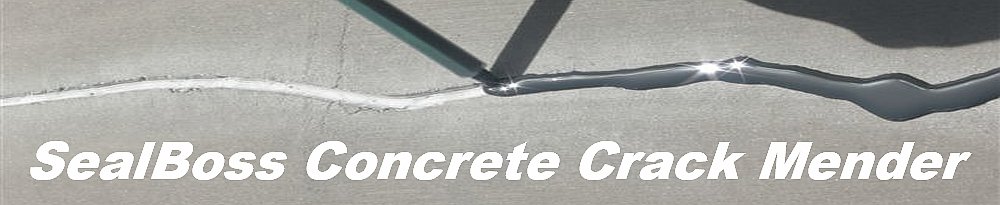
Concrete Crack Mender

Concrete Crack Mender

10 Minute Resin / Mortar

concrete crack mender

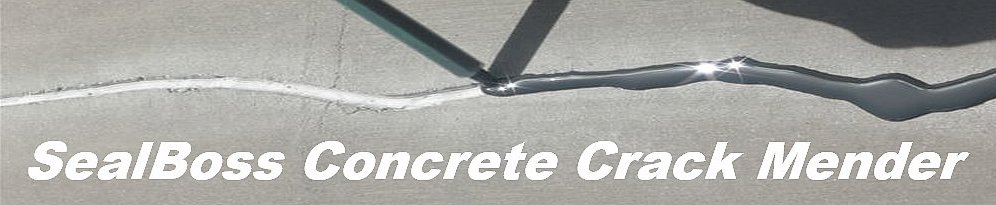
SealBoss 6060 QuickFix Repair Polyurethane — Repair concrete cracks and spalls to a smooth and durable finish with SealBoss Minute Concrete Crack Mender. Full repair in a fraction of the time it would take with traditional products.
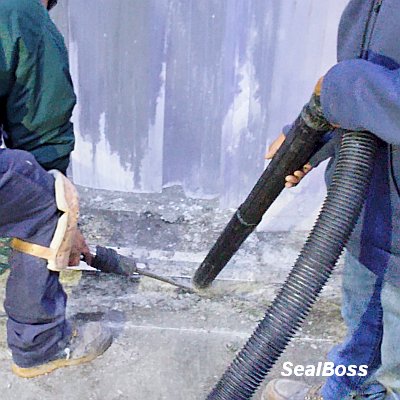
SealBoss uses the latest formulations in polymer technology to provide you with repair systems that are strong enough for highway repairs, easy to use, economically viable and perform to the highest standards in the industry. Almost as thin as water, SealBoss 6060 is made for deep penetration into the cracked concrete to provide for a quick and permanent fix.

Our systems are used world wide to repair concrete cracks and spalls in industrial floors and warehouses.

SealBoss Quickfix floor repair and joint fill systems offer minimal downtime repair solutions and are specified and applied by manufacturing, distribution, fabrication industries as well as large retailers, wholesalers and on-line mega stores — such as Costco and Amazon.

SealBoss 6060 QuickFix Crack Repair resins and SealBoss 6050 Polyurea Joint Fillers are available in cartridges and in five gallon pails.

SealBoss QuickFix Floor Repair

Contact Your SealBoss ® Technician

Recent Posts

More Posts

Archives
Categories
Scroll to Top