Crack, Joint, Penetration, or Broad-Area Leak? Choosing an Injection Approach
The repair approach should follow the geometry of the water path, the available access, and the intended function of the repair.
SealBoss Corp. • Technical blog series • Technical review required before publication
Scope boundary
This part compares repair categories and material-family vocabulary. It does not prescribe a project-specific grout, drill layout, pressure, packer spacing, or equipment setup. Structural crack repair is outside the series.
On this page
- The repair approach should follow geometry, access, and function
- Quick method-selection matrix
- Begin with the pathway geometry
- Discrete cracks: water control or structural repair?
- Construction joints, cold joints, and movement joints are not interchangeable
- Pipe penetrations and annular spaces contain several possible pathways
- Tie holes, honeycombing, and localized voids
- Broad-area seepage and inaccessible positive-side conditions
- Material families at a glance
- Site conditions may require testing or a mockup
- Select the repair category before assembling the system
The repair approach should follow geometry, access, and function
A leaking concrete structure is not one uniform repair condition.
Water may be moving through a discrete crack, along a construction joint, around a penetration, through a localized void, or across a broad area behind the structure. Each condition presents a different access problem. Each affects how packers or ports may be installed, where material is intended to travel, how the work can be observed, and which limitations must remain explicit.
The correct early question is not, “Which grout should be used?”
It is, “What are we trying to reach, and what is the repair expected to accomplish?”
Quick method-selection matrix
| Condition | Geometry and access | Typical injection-point category | Governing SealBoss path | Explicit boundary |
|---|---|---|---|---|
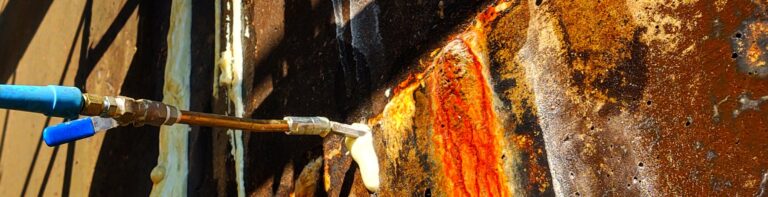
| Discrete crack | Traceable or intersectable opening through concrete | Mechanical packer or surface port, as directed by the current guideline | Polyurethane crack injection and epoxy versus polyurethane | Waterproofing injection is not automatically structural repair. |
| Construction or cold joint | Interface between placements; may continue beyond visible leak | Packer, port, or existing designed injection system, as applicable | Cold-joint resources and Resource Page | Do not treat an expansion or movement joint as a construction joint without project review. |
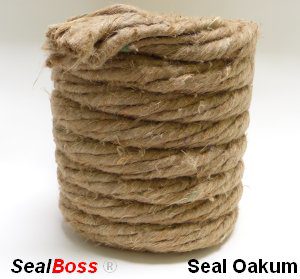
| Pipe penetration or annular space | Multiple possible interfaces around pipe, sleeve, seal, and surrounding concrete | Localized packers or ports; oakum or backer material may be part of an approved containment method | Watertight pipe penetration sealing and SealBoss Seal Oakum | The visible wet ring does not prove which interface is carrying water. |
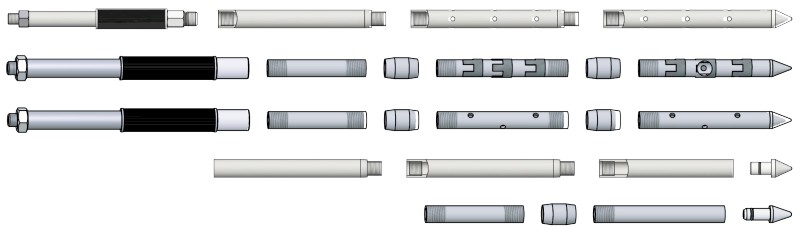
| Tie hole or localized void | Recognizable opening or irregular local cavity | Packer, port, needle, or other approved access | Injection packers, ports, and couplers | Extensive honeycombing or deterioration may require a broader repair scope. |
| Broad-area or blind-side infiltration | Distributed pathways behind the structure or membrane | Staged grid, high-volume packer, lance, or compartment access, as designed | Curtain Injection in Pictures and blind-side waterproofing injection | Curtain grouting is a separate application category, not simply “more crack injection.” |
The table is a navigation aid, not a specification. Exact product, packer or port, drill layout, equipment, and application requirements must come from the current SealBoss source for the selected method.
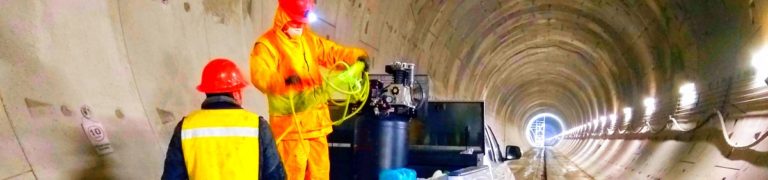
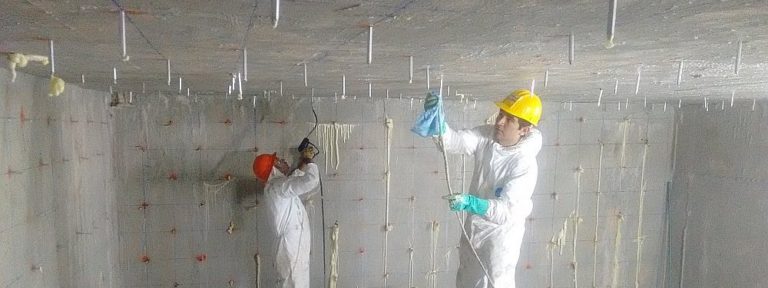
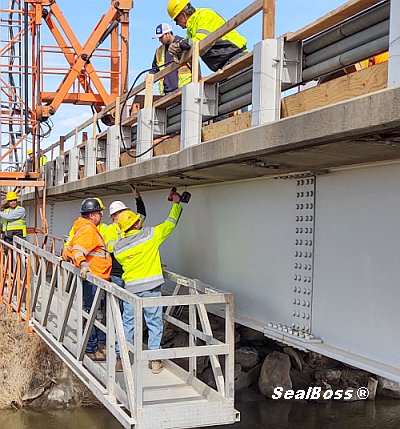
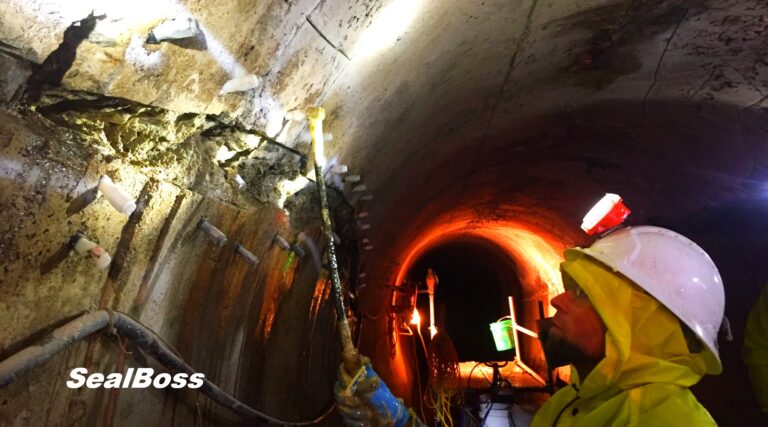
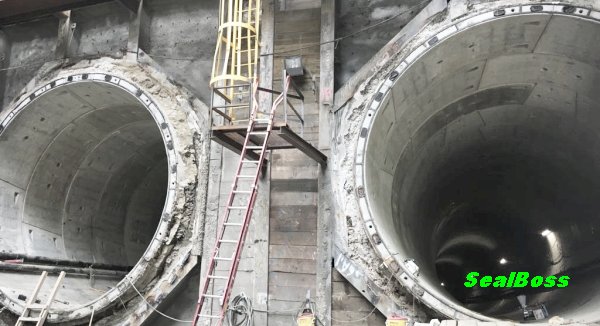
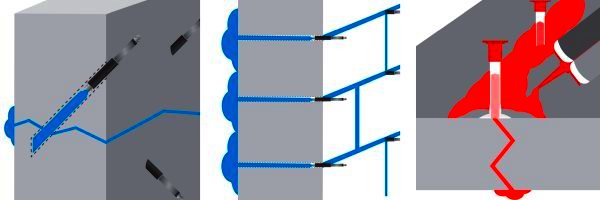
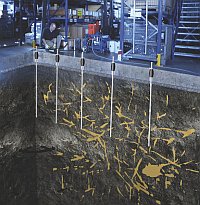
Field context: seeing the concealed side
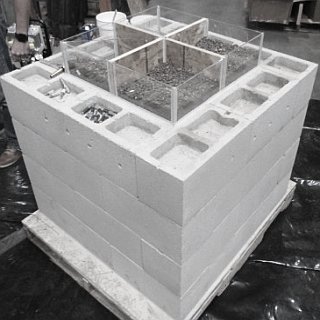
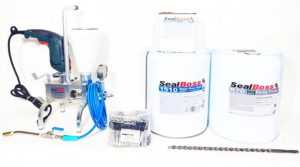
The photograph does not replace the method-selection table. It provides field context for why defect geometry and access should be established before a material or pump is chosen.
Begin with the pathway geometry
Injection introduces material into a crack, joint, opening, cavity, or treatment zone. The geometry of that destination matters before product chemistry is discussed.
A discrete crack may be traceable along a wall or slab. A construction joint may continue beyond the visible leak. A penetration may contain several interfaces within a small area. Broad seepage may indicate that no single visible opening represents the complete water path.
ICRI 710.5-2024, Guide for the Selection of Grouts to Control Water Leakage Through Cracks in Concrete Structures, provides independent industry context for relating grout characteristics to leakage-control conditions. The current designation and title should be cited in full on first use. Its scope does not make it a SealBoss product-selection document.
Discrete cracks: water control or structural repair?
A defined crack is often the most recognizable injection condition, but its internal geometry is rarely visible.
The surface expression may be continuous or intermittent, fine or open, dry or actively leaking. The crack may pass through the concrete element, branch internally, intersect another crack or joint, or terminate before reaching the opposite face.
Before crack injection is selected, the project team should consider whether the crack can be traced, whether water activity is present, whether movement is suspected, whether the concrete can support the intended injection point, and whether the repair objective is water control or structural crack bonding.
Those objectives must remain distinct.
ASTM D8109-25, Standard Guide for Waterproofing Repair of Concrete by Chemical Grout Crack Injection, addresses chemical-grout injection as a waterproofing repair and excludes injectable materials used for structural repair. ACI RAP-1, Structural Crack Repair by Epoxy Injection, addresses structural epoxy crack repair as a separate professional task.
The existing SealBoss comparison, Epoxy Versus Polyurethane Crack Injection, is the appropriate deeper path for readers comparing those repair objectives. The current data sheet and project requirements must control any named product selection.
Construction joints, cold joints, and movement joints are not interchangeable
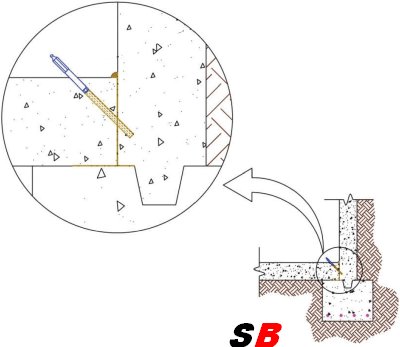
A construction or cold joint is an interface created by the sequence or condition of concrete placement. It may extend beyond the visible wet area and intersect waterstops, keyways, penetrations, wall-to-slab interfaces, or other construction details.
An expansion or movement joint is intentionally detailed to accommodate movement. Injection that rigidly or indiscriminately fills the joint may interfere with its intended function. The project team should confirm the joint type, movement requirement, seal or waterstop configuration, and repair objective before selecting a method.
A localized injection approach may be considered when the relevant pathway can be reached and contained. Where a preplaced injection tube is part of the original joint system, the manufacturer’s current instructions and project documents control its use. ASTM D8109-25 specifically excludes injection into preplaced permeable waterstop tubes from its scope; those systems should not be presented as though they fall under the guide’s crack-injection procedure.
The visible leak length should not automatically define the complete treatment length. Nor should one drill pattern or packer spacing be applied to every joint without the current SealBoss guideline and project review.
Pipe penetrations and annular spaces contain several possible pathways
Water around a pipe, conduit, sleeve, tie, anchor, or embedded component may travel through the annular space, along the outside of the sleeve, through a failed seal, through adjacent cracked concrete, or beside another embedded interface.
The project team should establish what components are present, where they extend, and which spaces must remain open. Drawings, utility records, and information about the original penetration assembly can be especially important.
A localized injection approach may be suitable when the pathway is defined and the intended material destination is acceptable. Wider or irregular openings may require an approved containment method using oakum, backer material, or another compatible support component before or during injection. The exact method must come from current SealBoss application guidance.
Review Watertight Pipe Penetration Sealing, SealBoss Seal Oakum, and the SealBoss Resource Page for the relevant technical path.
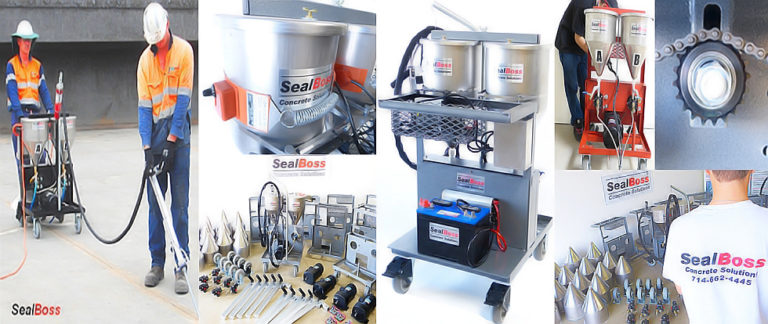
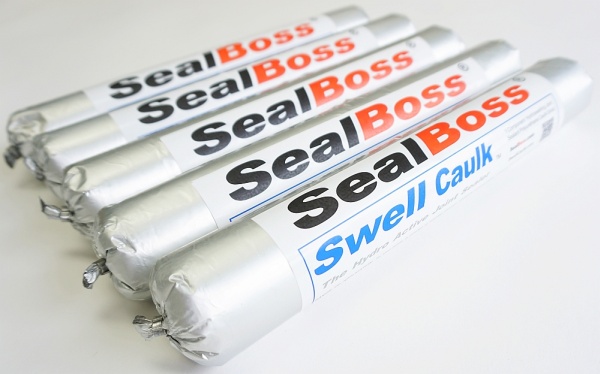
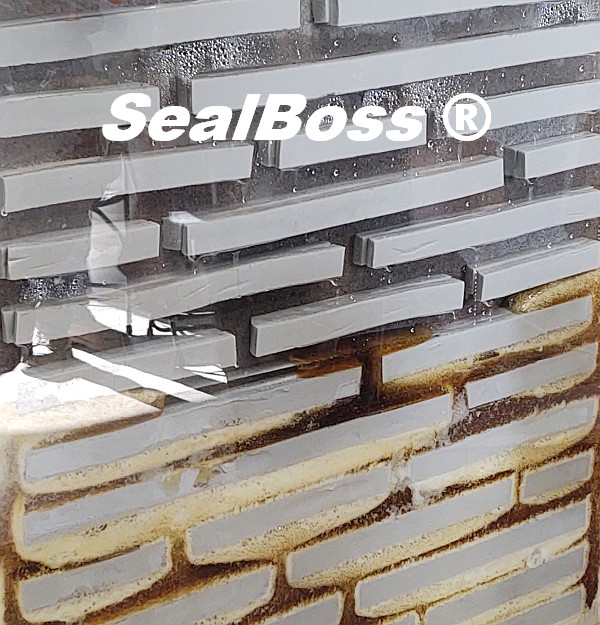
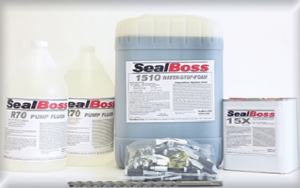
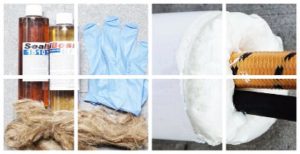
Penetration repair components
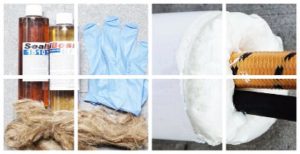
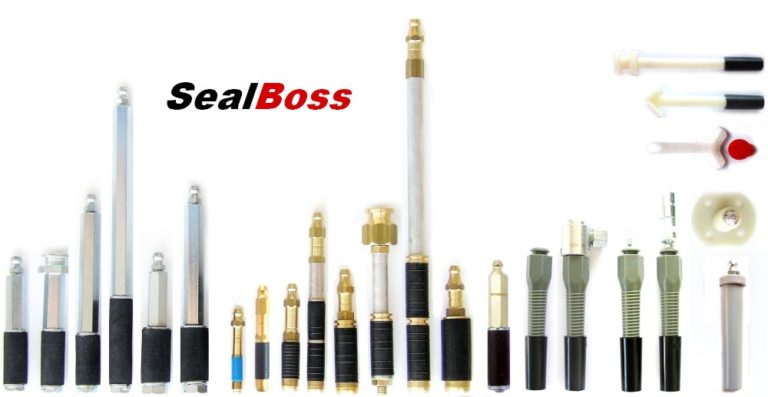
This product photograph is linked as a resource pathway; it is not a universal penetration specification. Confirm the assembly and current application guidance for the actual condition.
Tie holes, honeycombing, and localized voids
Tie holes and localized construction defects can create direct or interconnected water pathways.
Some form-tie openings are readily recognizable. Others may be concealed by patching or finishes. Honeycombed concrete may contain a network of irregular voids rather than one smooth passage.
When the condition appears localized and the opening can be reached, a defined injection or sealing approach may be considered. When the defective area is extensive, deteriorated, or structurally significant, a broader repair assessment may be required.
The team should not assume that water emerging from one tie hole is confined to the original tie diameter. The scope should reflect the apparent volume and continuity of the defect—not merely the size of the visible outlet.
Broad-area seepage and inaccessible positive-side conditions
Some structures exhibit distributed dampness, recurring seepage at several points, multiple fine leaks, or evidence that water is moving across the positive side of the structure.
When positive-side access is unavailable, treatment of each visible outlet may not address the broader condition. Curtain, bladder, blanket, stage-grouting, compartment, or related area-injection concepts may warrant evaluation.
This is a different repair geometry from crack injection. Crack injection seeks to reach an identified opening within the concrete. Curtain-type work introduces material through the structure into a treatment zone behind or adjacent to it. The work may require a grid or staged layout, different flow characteristics, greater material volume, high-volume packers, specialized pumps, mockups, and more extensive monitoring.
Section 4.6 of ASTM D8109-25 identifies existing construction, prior waterproofing installations, access, water volume or flow rate, water chemistry, temperature, humidity, and other factors as conditions that may warrant evaluating curtain grouting as an alternative to crack injection.
Go deeper: See Curtain Injection in Pictures, Blind-Side Waterproofing Injection, SealBoss Injection Lances, and the curtain layout resources on the Resource Page.
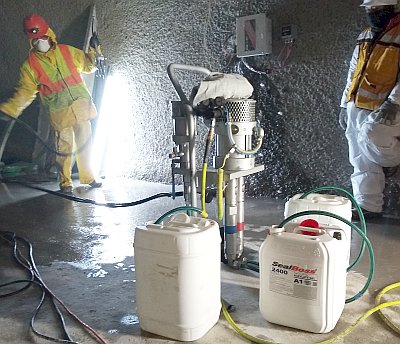
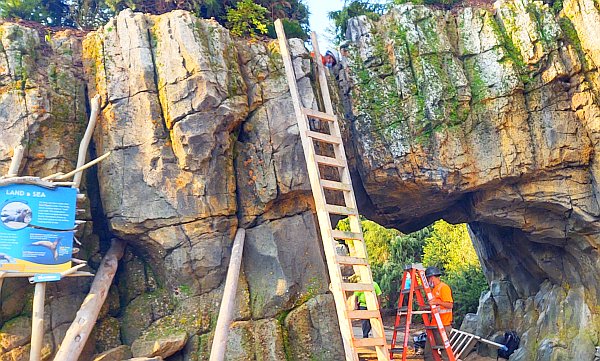
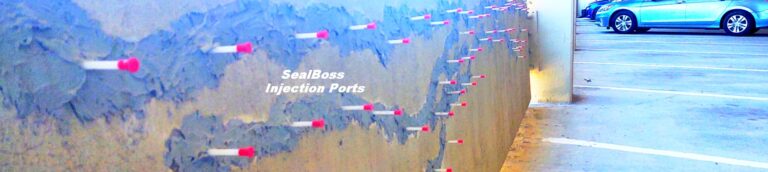
Curtain injection as a separate application category
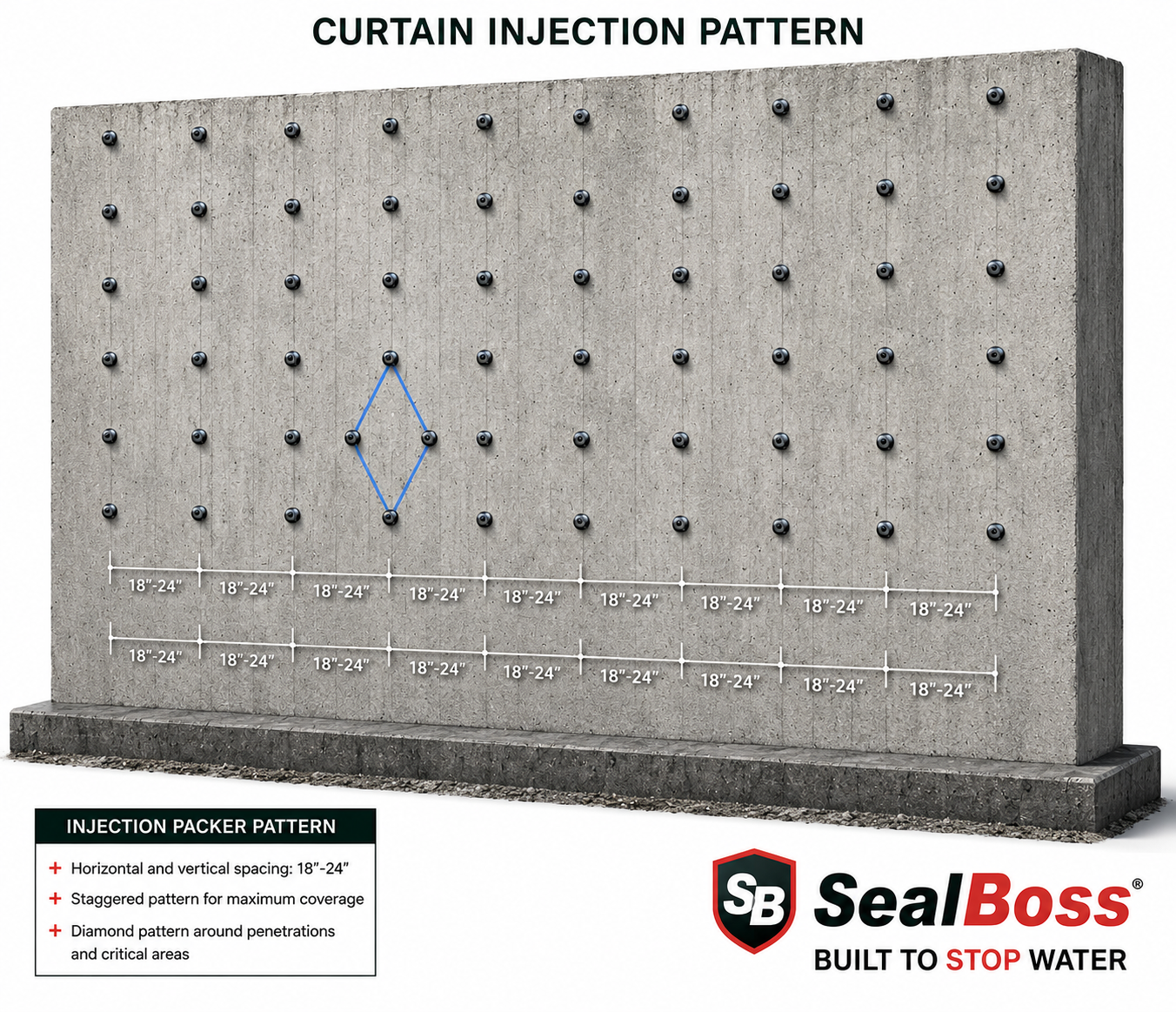
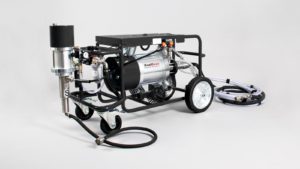
The photograph supports the broad-area section of this article. Detailed grid layout, material selection, equipment, and injection sequence must come from current SealBoss guidance and project-specific review.
Material families at a glance
This block provides vocabulary, not a project-specific selection rule.
| Material family or configuration | General distinction | SealBoss reading path |
|---|---|---|
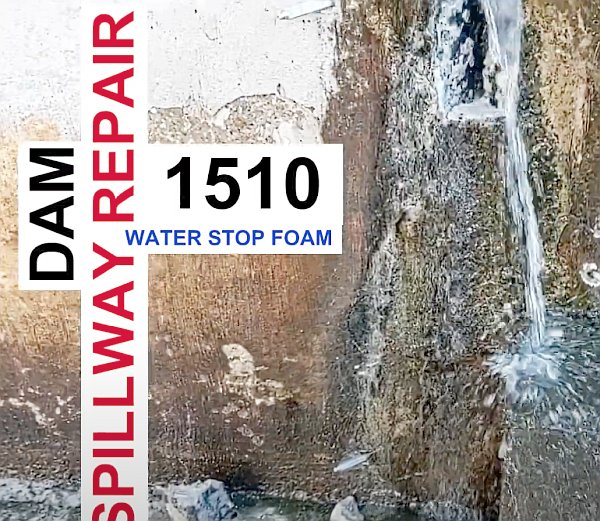
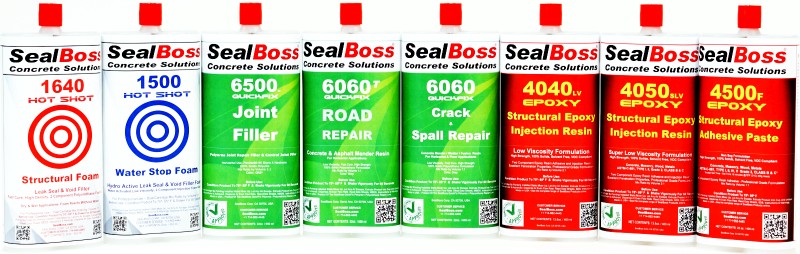
| Hydrophobic polyurethane | Water-reactive polyurethane category in which the cured material is generally intended to resist water uptake; products may form foam or resin-like structures depending on formulation. | Hydrophobic Versus Hydrophilic Polyurethanes and SealBoss 1510 Water Stop Foam |
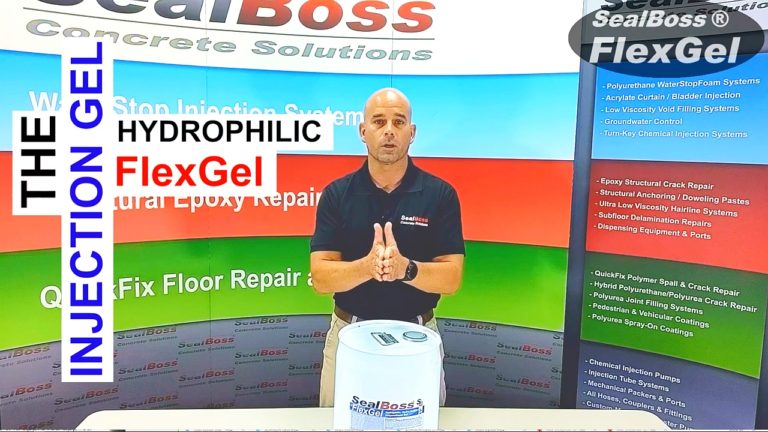
| Hydrophilic polyurethane | Polyurethane category formulated to interact strongly with water and, depending on the product, form flexible foam or gel. | Hydrophobic Versus Hydrophilic Polyurethanes and SealBoss FlexGel |
| Single-component configuration | One principal resin stream is delivered by the pump; an accelerator or additive may be incorporated before pumping when the exact product requires it. | Current product data sheet, application guideline, and leak-seal pump category |
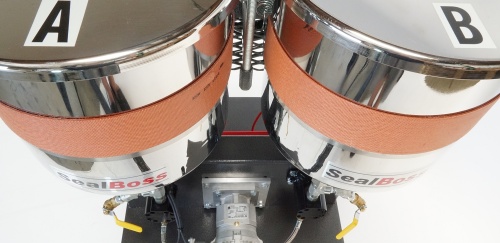
| Plural-component configuration | Components are kept separate and proportioned or mixed through the approved equipment arrangement. | SealBoss 2400 Acrylate Gel and current gel-pump documentation |
| Foam | Material response includes expansion or foaming; the exact expansion, cell structure, reaction profile, and confinement requirements are product-specific. | Water Stop–Leak Seal overview |
| Gel | Material forms a gel rather than a conventional expanding foam; viscosity, reaction, flexibility, water interaction, and service limits are product-specific. | SealBoss FlexGel and SB 2400 Acrylate Gel |
| Epoxy | Rigid adhesive resin category used for structural crack bonding when the crack, substrate, design, and installation conditions are appropriate. | Structural Repairs–Epoxy and Epoxy Injection Structural Concrete Repairs |
Exact properties and suitability must be verified from the current SealBoss data sheet, application guideline, certification, and project documents.
Site conditions may require testing or a mockup
Some projects contain factors that cannot be resolved adequately from a general comparison. Water chemistry, contamination, unusual temperature, unknown void geometry, nearby buried components, existing membranes, occupied conditions, and environmental restrictions may affect material selection or containment planning.
Any SealBoss chemical-resistance, compatibility, or exposure statement must come from the current SealBoss data sheet, resistance chart, test report, or written technical confirmation.
Select the repair category before assembling the system
Use this sequence:
- Document the condition.
- Identify the apparent geometry.
- Define the repair objective.
- Confirm access, material destination, and limitations.
- Select the repair category.
- Review the current material, pump, packer or port, accessories, guideline, cleaning, safety, and training requirements.
There is no responsible one-line rule that selects a complete injection system from the visible defect name alone.
Related articles, products, equipment, and technical resources
Use the links below to move from the educational framework to the relevant SealBoss application, product, equipment, case-study, or technical page.
Concrete Crack Injection—Polyurethane
Dedicated polyurethane crack-injection overview.
Frequently asked questions
No. Chemical-grout waterproofing and structural epoxy crack repair have different objectives, material behavior, equipment, and project responsibilities. Review Epoxy Versus Polyurethane Crack Injection and the current technical documents for the exact system.
Not automatically. An expansion or movement joint is intended to accommodate movement. Its design, seal or waterstop system, movement requirement, and repair objective must be reviewed before injection is selected.
Curtain injection may warrant evaluation when water paths are distributed behind the structure, positive-side access is unavailable, or project factors make individual crack injection insufficient. The decision requires project-specific review and current application guidance.
No. The visible location is only one factor. The repair objective, water condition, defect geometry, access, movement, service environment, material destination, and delivery system also matter.
Translate the selected repair category into a coordinated material, pump, packer or port, and method.
Current SealBoss technical documents remain controlling. Contact a qualified SealBoss technical representative when material, equipment, or application selection requires additional review.
Technical source direction: SealBoss sources control SealBoss product and equipment facts. ASTM, ICRI, ACI, OSHA, and other primary authorities provide independent industry or regulatory context within their stated scopes. Project-specific suitability, engineering decisions, warranties, and field procedures require the current controlling documents and authorized responsible parties.