PODCAST

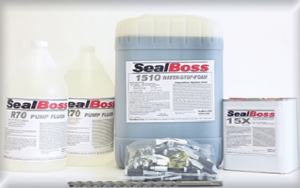
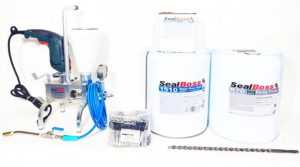
Versatile Injection Grout SealBoss 1510
SealBoss 1510 Features Summarized in a 5 Minute Overview
Podcast Transcript
Okay, let’s unpack this. You know, imagine maybe a historic building standing firm despite relentless groundwater. Or maybe a subway tunnel where not a single drop seeps through. Ever wondered how critical challenges like persistent water leaks in concrete or maybe unstable soil beneath massive structures are actually tackled? Today, we’re taking a deep dive into a powerful, often unseen solution that really gets into the structure of our world. Our mission then is to explore what’s widely considered the most versatile injection grout out there: SealBoss 1510. You might also know it as Water Stop Foam.
Yeah, that’s right. And it’s not just any product. It’s a flagship for a reason. It’s specifically engineered for professional use across a really surprising and vital range of applications. It’s one of those silent heroes, really.
Okay, so let’s get into the nitty-gritty then. What is this water foam? Is it like the spray foam insulation you might use in your attic, or something else entirely?
That’s a great question. They’re both foams, yes, but very different chemistry and purpose. SealBoss 1510 is actually a specialized liquid sealant first. We call it hydrophobic, which basically just means it repels water—it actively pushes it away. And critically, it’s water-activated. The moment it hits water—bang!—it kicks off a chemical reaction, okay?
It expands, forming this dense, impermeable foam. It’s based on MDI polyurethane. That’s a really robust polymer, very durable. Plus, it’s formulated to be 100% solvent-free and 100% solids. Very pure, very potent stuff. And when you mix it with its 15X accelerator additive—well, that one is really designed to cut off flowing water almost instantly.
Yeah. Hold on, 40 times expansion? Did I hear that right? That sounds huge.
You did—40 times. It’s pretty astounding.
So, you could fill up massive voids with just a tiny amount of product. That seems incredibly efficient.
Exactly. That huge expansion factor isn’t just for show. It’s a total game-changer for efficiency on-site. It means you can tackle really big voids and high-volume leaks with surprisingly little material. It makes jobs faster, more effective, and ultimately saves costs.
Makes sense.
And beyond that, here’s where its credentials really make a difference. It’s NSF/ANSI 61 certified for drinking water contact.
Okay, that sounds important. NSF/ANSI 61. What does that actually mean in practice for where it can be used?
Oh, it’s absolutely vital. That certification means it’s proven safe to use in critical drinking water infrastructure. Think reservoirs, water treatment plants, the pipes carrying water to your tap, right?
It guarantees no harmful stuff leaches into the water supply. That’s a huge differentiator, something generic products just can’t claim.
Oh, I see.
And just on a practical note, it’s even unregulated for transport, which might sound minor, but it really simplifies getting it to job sites, especially tricky ones.
That’s a lot packed into one product for stopping leaks.
Yeah.
So, thinking about concrete leaks specifically, what kind of cracks are we talking about? Does it work for absolutely everything?
Well, for most crack injection scenarios in concrete, this foam is definitely the go-to. It’s incredibly versatile. It handles everything from tiny hairline cracks you can barely see all the way up to gaps about 3/4 of an inch wide.
Okay, 3/4 inch. So, what if it’s wider than that? A really big gap?
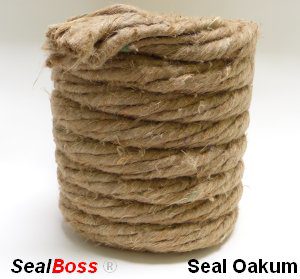
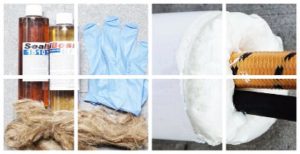
Yeah. For those wider, more challenging ones, there’s the oakum method, sometimes called the oakum rope method. It involves soaking a special fibrous rope, oakum, in the 1510 liquid and then packing that soaked rope into the larger crack.
The foam then expands in and around the oakum, creating this really robust composite seal. Very strong, very long-lasting.
Right. Got it. You mentioned versatility earlier, and I’m really struck by how far its uses go beyond just filling cracks. What else can this stuff do?
Oh yeah, its applications really do extend significantly beyond just simple crack repair. If you look at the bigger picture, yes—general leak sealing, concrete repair—but also vital void filling. That’s a big one. For instance, injecting it underneath concrete slabs. Imagine a sinking driveway or maybe a warehouse floor that needs lifting or stabilizing. That’s often called blanket injection.
The foam spreads out horizontally like a blanket, creating a solid support layer underneath.
Okay, blanket injection.
Or say you have water constantly seeping through a basement wall; you can inject the 1510 behind the wall itself. It creates this impermeable curtain or bladder of foam back there. Stops the water before it even gets to the concrete. That’s curtain injection.
Curtain injection. Wow. And I definitely saw something about soil stabilization, too. That sounds like a completely different field of engineering almost.
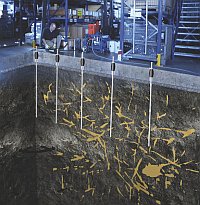
It really is. And it just shows the material’s adaptability. If you use just a low percentage of that 15X accelerator, the reaction changes. The material’s properties shift, and it becomes this highly effective soil stabilization grout.
How does that work?
It basically permeates into loose soil or pockets of gravel deep underground. Then it expands and hardens, binding everything together. Turns unstable ground into a solid, cohesive mass.
Incredible.
Which makes it super valuable for really challenging geotechnical projects. Things like supporting deep excavations, keeping tunnels stable while boring, strengthening the ground. It prevents collapses, keeps things safe. It truly shows the breadth of it, you know, from sealing a tiny leak to basically fortifying sections of the earth.
So, what does this all mean for you listening in? Well, next time you walk past a construction site, see a newly stabilized building foundation, or maybe just notice your own basement is miraculously dry after a downpour, you’ll know there could be a highly specialized material, something like SealBoss 1510, working unseen, solving these complex problems that quietly keep our world structurally sound and running smoothly.
Absolutely. It just highlights how these specific advancements in material science really underpin the safety, stability, and longevity of everything we build—often without us even realizing the complex solutions involved. So maybe think about this: what stands out to you about the unseen materials, the hidden technologies that make our everyday environment work?
Bulkhead Repair
Bulkhead Repair
Bulkhead Restoration | Erosion Control | Permeation Grouting
Introduction
Welcome to our exploration of Bulkhead Repair, where we’ll delve into the essential techniques for maintaining and restoring these critical shoreline structures. Bulkheads play a crucial role in coastal and waterfront protection, acting as barriers that prevent erosion and stabilize soil along beaches, lakes, and rivers. These structures not only protect adjacent properties but also help preserve the natural shoreline and infrastructure.
In this episode, we focus on the application of polyurethane foams—a versatile material widely used for bulkhead and seawall repairs. These foams offer several advantages: single-component foams are ideal for crack injections and permeation grouting, which anchor soils and slow erosion. Meanwhile, plural-component foams are excellent for filling voids, stabilizing concrete structures, and, under controlled conditions, even adjusting structural alignment. With their low viscosity, these foams penetrate deeply, bonding and reinforcing weak soils and damaged substrates to extend the life of bulkheads.
Whether you’re a contractor, engineer, or simply interested in learning more about infrastructure repair, this episode provides valuable insights into how modern techniques keep our coastal environments and waterfront properties protected against the forces of nature.
Unpacking Bulkhead Repair: A Deep Dive into the Use of Polyurethane Foams for Bulkhead Repair
Technical Podcast for the Infrastructure Repair Industry
Crafted specifically for marine and coastal environments, bulkheads are structures designed to strengthen soil conditions along the shores of beaches, lakes, and rivers. They not only maintain but also offer strategic protection to substrates from neighboring waters, ensuring the safety and longevity of adjacent structures. Beyond serving as mere protective barriers, bulkheads elevate the functionality of waterfront zones, ensuring a safe haven for both the buildings and the individuals who frequent the shoreline.
Join us for a captivating episode where we delve into the intricate world of bulkhead repair, focusing on the unique properties and application techniques of single and plural component polyurethane foams. Our guest, Jerald, a seasoned contractor with over three decades of experience, offers invaluable insights into the art and science of using these foams for long-lasting and efficient bulkhead restoration.
Episode Highlights:
Bulkhead Repair | Seawall Restoration | Permeation Grouting | Soil Erosion Control
The Dual Role of Polyurethane Foams
Jerald sheds light on the distinct and synergistic functions of single and plural component foams in bulkhead repair, emphasizing their specific application techniques.
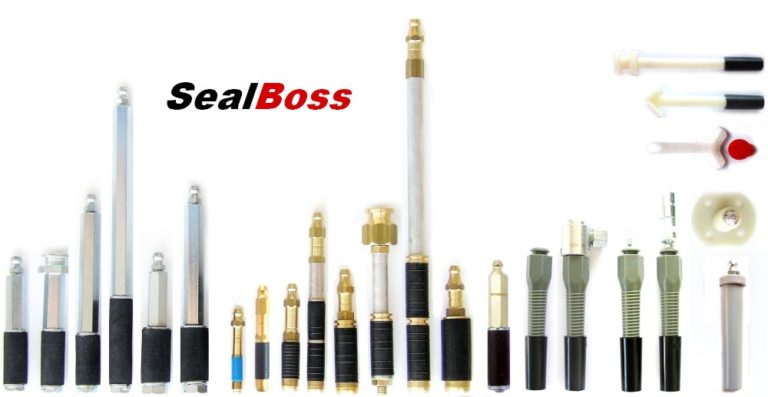
- Single-Component Foam: Ideal for water stop crack injections and substrate permeation grouting, single-component, accelerator adjusted, polyurethane foam sets the stage for comprehensive bulkhead leak sealing and soil stabilization. Master the technique of employing grout injection lances and needles to distribute the product effectively into the ground, anchoring sand and gravel — an essential measure for bulkhead stabilization and erosion prevention.
- Plural Component / Two Component Structural Void Fill and Lift Foam: Renowned for its efficiency in filling voids and stabilizing concrete structures embedded in substrate with voids and gaps, this foam can penetrate, fill, and strengthen unsupported areas effectively. In the hands of a skilled contractor, the product can be used to adjust and correct the alignment of structural elements under specific conditions. However, due to its potent expansion capabilities, it’s crucial to exercise caution. The intense outward pressure it generates could inadvertently shift structures beyond the intended position.
About Slabjack Geotechnical
Established in 2011, Slabjack Geotechnical offers a comprehensive range of concrete services, including Slabjacking (concrete raising), pressure grouting, concrete crack, and joint sealing repair. They also specialize in leak seal applications in various structures. With operations in Spokane, Tri-cities, Wenatchee, and Puget Sound, they serve Commercial, Municipal, and Industrial sectors in Washington and Idaho.
With over 30 years of successful business ownership and a knack for problem-solving, Jerald is a cornerstone of the Seattle-area Slabjack company. His expertise in Slabjacking and geotechnical projects is sought after across the USA and Canada.
A big thank you to Jerald for gracing our technical podcast and sharing his vast knowledge with our listeners!
A Conversation Between Two Industry Professionals
Our guest today
Jerald Sargent, Slabjack Geotechnical, Washington
Your host: Chris Coderre, SealBoss Corp.
Concrete Solutions Network / Sealboss ® Podcast ©
Mockups | Curtain Wall Grouting | Negative Side Injection Waterproofing
Mockups
Curtain Wall Grouting | Negative Side Injection Waterproofing
Technical Podcast for the Infrastructure Repair Industry
The Importance of Mockups | Below Grade Injection Waterproofing
A Conversation Between Two Industry Professionals
Our guest today
Jake Holland, Vice President, Project Manager
Summit Sealants Inc. | Colorado / Washington
Your host: Chris Coderre, SealBoss Corp.
Predictive Mockups | Curtain Wall Grouting Techniques, Products and Injection Packers
“The Mockup is Worth its Weight in Gold”
In this episode Jake Holland explains how mockups help improve injection job performance and predict successful outcome. Jake provides some insight into specific injection techniques, product characteristics and preferred packer sizes for curtain wall grouting.
Jake Holland studied at Colorado State University in the Project Management Program. He has close to two decades of experience in commercial construction, waterproofing, structural restoration, and historical restoration. He comes from a long line of experience in the sealant trade and has proven himself to be a top project manager handling some of the most high profile restoration projects in Colorado. Summit Sealants has been specializing in waterproofing and water mitigation on commercial structures and operates from 4 locations in Colorado and Washington.
Thank you Jake for being a guest on our technical podcast!
The Indispensable Role of Mockups in Injection Waterproofing
Introduction
Injection waterproofing has become a crucial technique in the construction and maintenance of various structures, from residential homes to commercial buildings, and even infrastructure projects such as tunnels and bridges. This method is employed to improve the water-resistance of structures and protect them from the detrimental effects of water seepage. A pivotal step in ensuring the effectiveness of this waterproofing technique is the creation and utilization of mockups. This article aims to delve into the importance of mockups in injection waterproofing.
Understanding Injection Waterproofing and Mockups
Before discussing the importance of mockups, it’s essential to understand what injection waterproofing entails. This technique employs the strategic injection of waterproofing materials such as polyurethane or epoxy resins into various aspects of a structure. These materials are inserted into pores, cracks, and joints within the structure, and even into the space surrounding the structure, extending to the dirt substrate. This comprehensive approach serves to effectively block the ingress of water, creating a formidable barrier against potential water seepage. It’s a crucial process that can enhance the longevity of the structure and safeguard it against dampness, water damage, and structural integrity problems.
In this context, a mockup can be understood as either a functional replica of the structure or, more commonly, a carefully selected segment of the existing structure.
This designated part is chosen for its representative nature, closely mirroring the conditions and real-world challenges anticipated during the comprehensive execution of the waterproofing injection project. Thus, it offers a realistic simulation of the full-scale scenario, providing valuable insights for the upcoming task.
The Importance of Mockups in Injection Waterproofing
- Testing the Feasibility of the Waterproofing Solution:
The first and foremost reason to create a mockup is to validate the feasibility of the chosen waterproofing solution. A mockup can test whether the proposed waterproofing material will adhere correctly to the structure’s material, effectively seal its cracks, or withstand its environmental conditions. This step is critical to avoid costly mistakes and ensure the waterproofing solution’s efficacy. - Improving Accuracy and Predictability:
A mockup can help determine the exact amount of waterproofing material required and the optimal injection points and pressures. This can reduce waste and improve efficiency in the actual construction phase. Moreover, the mockup stage can reveal potential issues that may arise during the application, enabling teams to address them proactively. - Enhancing Training and Communication:
Mockups are instrumental in training the application team. They provide a hands-on experience, enabling team members to familiarize themselves with the application process, understand the structure’s complexities, and gain confidence before proceeding to the actual project. Furthermore, they facilitate clear communication among the project’s stakeholders, ensuring everyone understands the proposed solution and its implementation. architectural projects.
Conclusion
The use of mockups in injection waterproofing offers a range of significant advantages, from improving project accuracy and predictability to enhancing team training and communication. By representing a vital stage in the waterproofing process, mockups can significantly increase the chances of project success, making them an indispensable tool in contemporary construction practice. Therefore, it’s safe to conclude that any injection waterproofing project can immensely benefit from investing time and resources into creating and using a detailed, accurate mockup.
Concrete Solutions Network / Sealboss ® Podcast ©
How To Podcast | Leak Sealing Polyurethane Crack Injection | Concrete / Shotcrete
Technical Podcast for the Infrastructure Repair Industry
How To Podcast | Leak Sealing Polyurethane Crack Injection | Concrete / Shotcrete
Polyurethane Crack Injection from Start to Finish
“…They don’t know Chemical Grout…”
A Conversation Between Two Industry Professionals | Episode 5
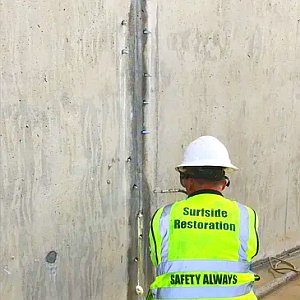
Our guest:
John Elder
President
Surfside Restoration & Waterproofing, Inc.
Your host:
Chris Coderre
SealBoss Corp.
How To Podcast:
Leak Sealing Polyurethane Crack Injection in Concrete and Shotcrete Structures
“… They don’t know Chemical Grout…”
A conversation with John Elder, a passionate concrete restoration professional with 30 years of polymer crack injection and concrete restoration experience….
In this episode, John shares his experience with chemical grout leak sealing injection from start to finish.
John provides insight into specific injection techniques, product characteristics and shares with you his personal preference for packers. He has some tips on how to deal with rebar when drilling packer holes and how to set packers strategically in adverse circumstances.
Learn about polyurethane foam resin viscosity and how it may affect your injection success.
Epoxy vs Polyurethane Chemical Grout
“… They don’t know Chemical Grout…”
Not all specifying engineers are familiar with the multitude of chemical grout products and injection techniques and how to use them correctly. As a contractor you should always voice your concerns. Occasionally the engineers need to be educated to specify the correct product for the job on hand.
John touches on the specific differences between epoxy injection and polyurethane chemical grout injection and when to use which product.
Thank you John for being a guest on our show!
About
Surfside Restoration & Waterproofing, Inc.
“Our past projects include both new construction and repairs/restorations. Occupied and fully operational job sites are never a problem. We offer an end-to-end client experience that includes seamless communication, budgeting, staffing, on-site organization, with quality workmanship every time.”
“As the owner of Surfside Restoration, I take pride in the fact that I am out there working with my crew on a daily basis. Not only does this help the morale of our crew, it is an added benefit to the contractors who hire us. They will get the answers they need instantly. No waiting for a return call with a guess of what issues may need to be resolved.” – John Elder
A Concrete Solutions Network / Sealboss ® Production Podcast ©
Elevator Pit Repair | How To Stop and Seal Active Water Leaks – Podcast
Elevator Pit Repair
How To Stop and Seal Active Water Leaks
Technical Podcast for the Infrastructure Repair Industry
Elevator Pit Repair with Chemical Grouts
A Conversation Between Two Industry Professionals
Our guest today
Jim Andres, President
American Restore
Your host: Chris Coderre, SealBoss Corp.
Introduction
Welcome to another episode of our Technical Podcast for the Infrastructure Repair Industry, where we explore elevator pit repair and methods for stopping active water leaks with chemical grouts. Our guest brings over three decades of experience in specialized waterproofing, sharing valuable insights into the complexities of elevator pit repairs. We’ll discuss the use of various grout chemistries, equipment considerations, and techniques for adapting to unique repair challenges.
Join us for an in-depth conversation on delivering quality solutions while balancing cost-effectiveness and project demands.
In this episode, Jim shares his experience with the many aspects of elevator pit repair.
” …You know, sometimes you have to use different chemistries. We’re lucky that we’ve been doing it a long time. So we got all kinds of weird equipment for multi ratio and stuff and then we’ve got guys that have been doing it a long time. We give the techs the tools and the chemistry and they go out and attack these things. … “
“…You have to be sensitive to the owners wallet…”
Thank you Jim for being a guest on our show!
About
Jim Andrews
“With over 30 years of innovative specialty contracting that ranges from the basics of concrete construction and repair to highly specialized and exotic waterproofing methods, Jim Andrews has cultivated extensive experience with a wide variety of project types. Jim is highly experienced in all aspects of shot blasting and related concrete reparation for specialty topping, coating and waterproofing systems, with extensive knowledge of all types of concrete restoration methodologies, specialty floorings, coatings, injection and all aspects of grouting. His specialized training, knowledge, and hands-on experience have included projects in civil, industrial, public and private construction improvements with field investigations featuring bonded overlays, topping systems, and heavy public and private sector industrial slabs.”
About
American Restore, Huntington Beach, CA
“American Restore is a specialty contractor with over 30 years of experience in the waterproofing and repair industry. No matter the project, no matter the size, we believe in always pursuing quality and excellence on all our projects. Because of this belief, customer service and attention to detail are our key principles. From the initial product selection, through the design process and installation, to the finished product, American Restore is committed to working with you and your organization to provide the highest quality and most cost-effective solution to your waterproofing problems.”
SealBoss Podcast – The Industry Triangle
The Industry Triangle
Specifiers – Contractors – Distributors
Technical Podcast for the Infrastructure Repair Industry
The Industry Triangle
Specifiers – Contractors – Distributors
A Conversation Between Two Industry Professionals
Our guest today: Mark Phillips, Front Range Specialty Projects, Inc., Colorado
Your host: Chris Coderre, SealBoss Corp.
Introduction
Welcome to this episode of the Concrete Solutions Network podcast, where we explore The Industry Triangle: the essential collaboration between specifiers, contractors, and distributors in the infrastructure repair industry. In this episode, we discuss the unique insights and experiences of an independent representative with over two decades in the building envelope industry. Together, we’ll explore how these key roles interact to ensure successful project delivery, emphasizing the importance of strong relationships and effective communication at every stage.
In this episode Mark shares his experiences as an independent representative and the importance of the interaction between the specifying engineers, trained contractors and stocking distribution hubs to ensure successful project delivery.
Now residing in Highlands Ranch, Colorado, Mark, originally from Redondo Beach, California has over 25 years of relevant experience in the building envelope industry. He has spanned the realm of industry roles to include installing systems, working for distributors and now is an independent representative for several manufacturers of building envelope products.
Thank you Mark for being a guest on our show!
Concrete Solutions Network / Sealboss ® Podcast ©